We're Accepting New Patients!
(812) 221-2227

We're Accepting New Patients!
(812) 221-2227

EXPERT TONGUE TIE AND LIP TIE EVALUATION AND GENTLE LASER TREATMENT


The frenum — the small band of tissue connecting the tongue or lip to surrounding structures — is something most people never think about. But when it's too short or too tight, it can create real challenges: a baby who struggles to latch, a toddler with speech delays, a child with recurring cavities because flossing in certain areas is difficult.
These restrictions are called tongue and lip ties, and they're addressed through a procedure called a frenectomy. At our practice, we use CO2 laser technology for precise, minimally invasive treatment.

Tongue and lip tie symptoms vary depending on the child's age and the severity of the restriction. In newborns and infants, the most common signs include difficulty latching, weak suction, slow weight gain, excessive gassiness, reflux, and maternal pain or nipple trauma during breastfeeding. In older children, ties may appear as speech challenges, spacing issues in the front teeth, recurring cavities in areas that are difficult to clean, and discomfort when chewing certain foods.
We take a thoughtful, conservative approach to tongue and lip tie treatment. Not every restricted frenum requires intervention — sometimes the restriction is mild enough that monitoring is the right choice, and some children compensate naturally as they grow. When a tie is causing real functional difficulty, however, addressing it early can prevent downstream problems. Untreated restrictions can contribute to speech and articulation challenges, orthodontic complications, gum recession, difficulty chewing certain foods, and poor oral hygiene in areas the tongue or lip can't clean effectively.

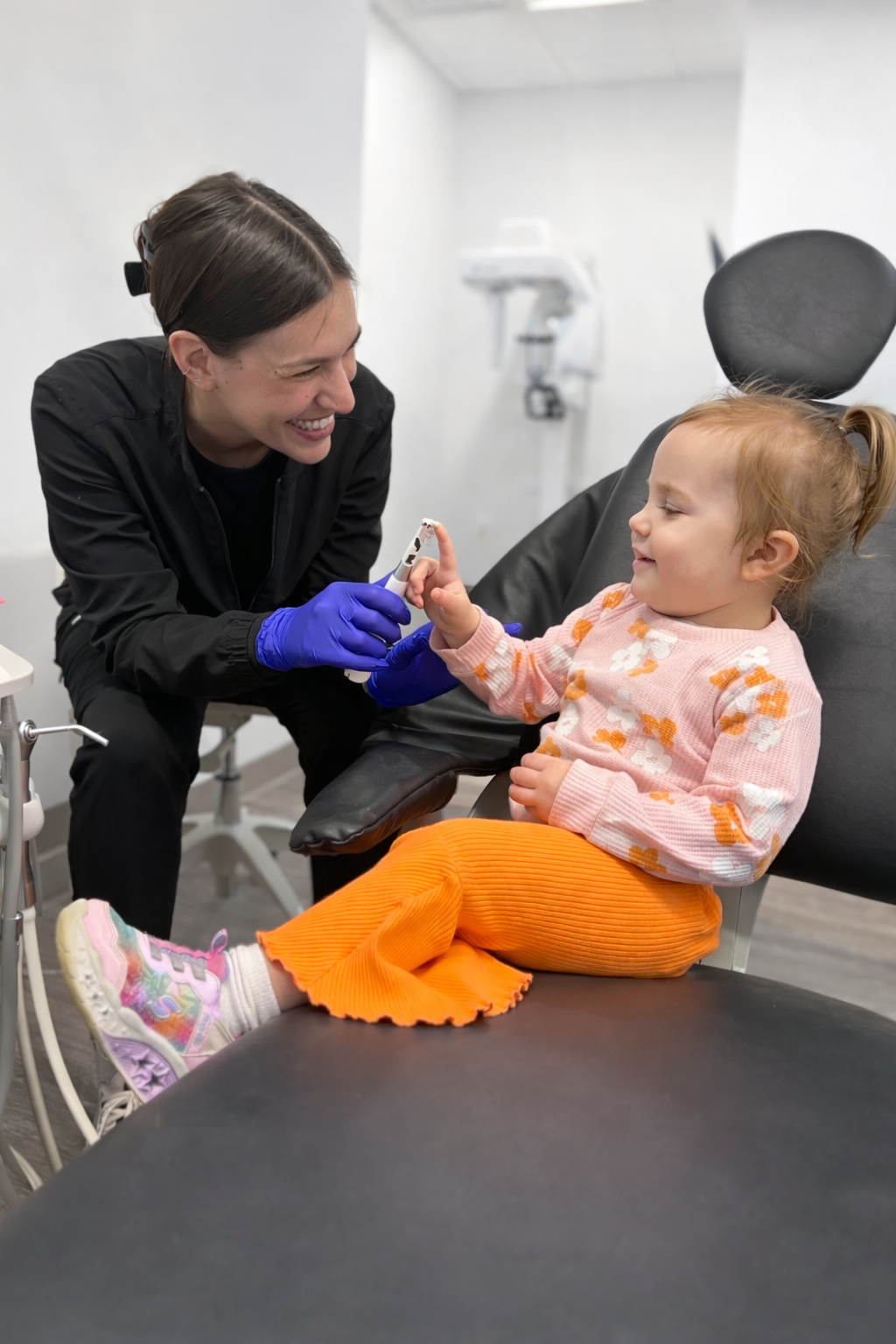
When a frenectomy is the right step, we perform the procedure using advanced CO2 laser technology — a method that is faster, more precise, and significantly more comfortable than traditional surgical techniques. CO2 laser treatment produces minimal bleeding, reduces post-procedure discomfort, and promotes faster healing. The procedure itself is brief. We apply topical anesthetic to ensure comfort, make the precise release, and have your child back in your arms quickly.
We provide thorough aftercare instructions and stretching exercises to support healing and prevent reattachment, and we schedule follow-up appointments to monitor progress. We also work closely with lactation consultants, occupational therapists, and other providers in the region to ensure your child has coordinated support throughout recovery.

